

The German economy is widely acknowledged as one of the most stable in the world, ranking third globally after the US and China. While Germany has experienced its share of economic issues in recent years, its economic growth is expected to recover gradually.
Couple that with a relatively large and affluent population (a result of its thriving economy), and you’ve got a lucrative market that is well worth targeting to add to your business revenue.
In this article, we will explore nine reasons for the robustness of the German economy and what this means for you as a business seeking to launch in the German market.
Why Germany’s economy keeps standing strong on the world stage
Let’s look at a couple of important economic data about Germany before we dive into where these numbers came from.
- The German economy is the biggest in Europe.
- Germany offers the largest consumer market in the European Union.
- Germany’s GDP is continually growing and was estimated to be 4.1 trillion Euros in 2023 (compared to France’s 2.8 trillion Euros and Great Britain’s 3.1 trillion Euros).
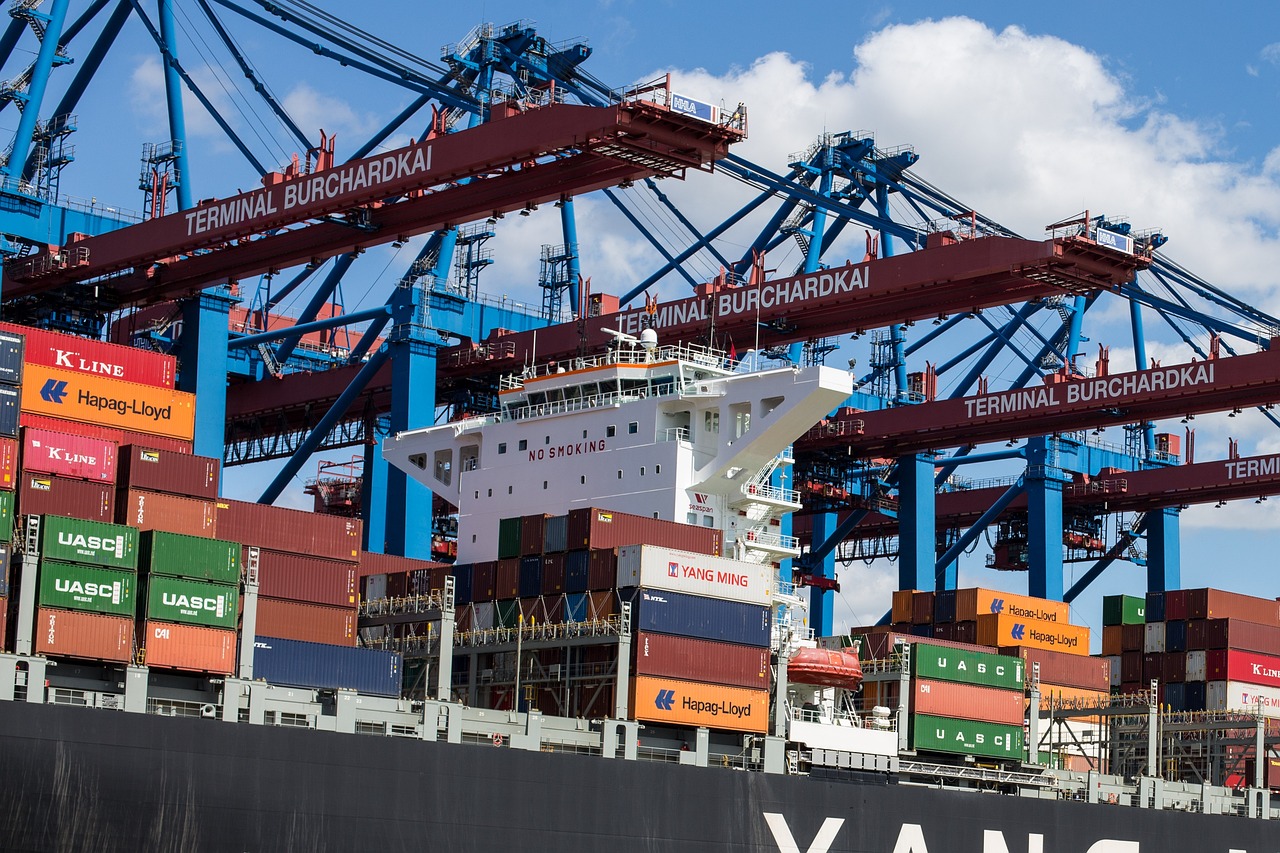
- In 2021, German exports were worth around 1,375 billion euros, while imports were worth over 1,200 billion Euros.
- While Germany is third in its GDP, its 84 million population makes up just 1 percent of the world’s population.
- Germany ranked 7th (out of 141 countries) among the world’s most competitive countries in 2019.
- Germany has one of the lowest unemployment rates in Europe, 5.7% in 2023.
In 2022, its export rate made up 50.3% of the country’s economy.
9 reasons behind Germany's robust economy
There are several reasons why Germany manages to keep its economy going well. Here are nine that we consider particularly important.
1. Strong industrial foundation
The German economy is deeply rooted in particular industries. The most important one is automotive (German cars ring a bell with most people worldwide). Other important industries are mechanical engineering and the chemical industry.
That means Germany does not focus on consumer goods but rather on products that other industries rely on to produce their goods, making the country’s economy less dependent on personal spending behavior.
2. Focus on high quality
The German economy is deeply rooted in particular industries. The most important one is automotive (German cars? Ring a bell with most people worldwide). Other important industries are mechanical engineering and the chemical industry.
That means Germany does not focus on consumer goods but rather on products that other industries rely on to produce their goods, making the country’s economy less dependent on personal spending behavior.
3. Engineering skills
Germany is known for its unmatched engineering skills. It is the country with the most patent registrations in Europe. Their culturally rooted drive for innovation and high performance, as well as their innate desire to “do things properly,” make them passionate about great engineering and market leaders in that field.
4. Educational system
Germans usually enjoy excellent job education, both vocational and academic.
This creates a highly skilled workforce, which contributes greatly to a country’s economic situation and plays a great role in Germany’s global competitiveness.
5. Research and development
Another important factor for Germany’s economic success is its investment in research and development, which amounts to over 3% of its GDP. The country also funds new and disruptive technologies, making it a desired destination for scientists worldwide who bring smart brains and innovative ideas to the country.
6. Focus on small and medium-sized businesses
One particularity about the German economy you probably didn’t know: SMEs make up 99% of all German companies. And almost 1,000 of them are unknown global market leaders, aka “hidden champions.” SMEs, called “Mittelstand” in German, provide more than half of the jobs in the country, making them a vital pillar of the German economy.
They create significant economic output, contribute immensely to corporate taxes, and play an essential role in the education of the workforce (the dual education system we discussed above). German Mittelstand is considered a true success story in Germany, which is also why, during crises (such as the pandemic), the German government is eager to support small and medium-sized businesses if needed financially.
7. High export rates
Here’s where the “Made in Germany” label comes into play again. The country’s high-quality goods create high demand worldwide, making Germany the world’s export champion. In 2022, its export rate made up 50.3% of the country’s economy.
It is important to note that such high export rates also pose a potential threat to the country because they create dependencies from the economies it sells to, something you have no control over. This is why Germany continually seeks to increase its import rates and domestic demand.
Germany has a very open economy, with an immense foreign trade quota of 98.6 percent (sum of imports and exports in relation to GDP).
8. Trade fair host
Germany is also the world trade fair leader. No other country hosts as many international trade fairs as Germany. And it only makes sense: Given the high foreign trade quota, attracting potential international business partners and starting a conversation is a key interest. In fact, a considerable volume of international trade happens during trade fairs in Germany.
Frankfurt, Leipzig, Berlin, Hamburg, Köln, Hannover, Düsseldorf, and Munich are trade fair hotspots, each focusing on a particular industry.
9. Strong start-up scene
Germany’s drive to innovate and create is the foundation of its strong start-up scene. In the first half of 2023, 1,300 start-up businesses were founded. This has several advantages for the country’s economic strength: it creates jobs, promotes competition and structural change, and spreads economic responsibility across many shoulders. Berlin is booming with start-ups, making the city a hotspot for innovative minds worldwide. Hamburg, Munich, Darmstadt, and Heidelberg are also important locations on the map.
SMEs make up 99% of all German companies.

Launching business in Germany
Businesses from abroad looking to market to Germany will likely benefit from its strong and diverse economy.
Thanks to Germany’s large population with relatively high incomes, which results in strong buying power, you will be able to sell your products to a large consumer market in a stable environment for decades.
A skilled workforce on the labor market will be especially convenient if you are looking to open new offices in Germany or would like to add German-speaking professionals to your team. Similarly, Germany’s start-up scene signals a strong drive for innovation and economic development and holds big potential for partnerships with like-minded businesses from abroad.
German Economy - German market supporting small and medium-sized businesses
As a small or medium-sized business, you are in very good company in Germany. SMEs are the norm and highly valued by consumers and German business partners.
Moreover, Germany is constantly looking to increase its imports to balance out its excess exports, making businesses from abroad extra attractive.
Lastly, attending fairs in Germany can be a great starting point for introducing your own products and services to the German business landscape and getting an overview of potential competitors and business partners.

Get Personalized Marketing Advice for Entering the German Market
